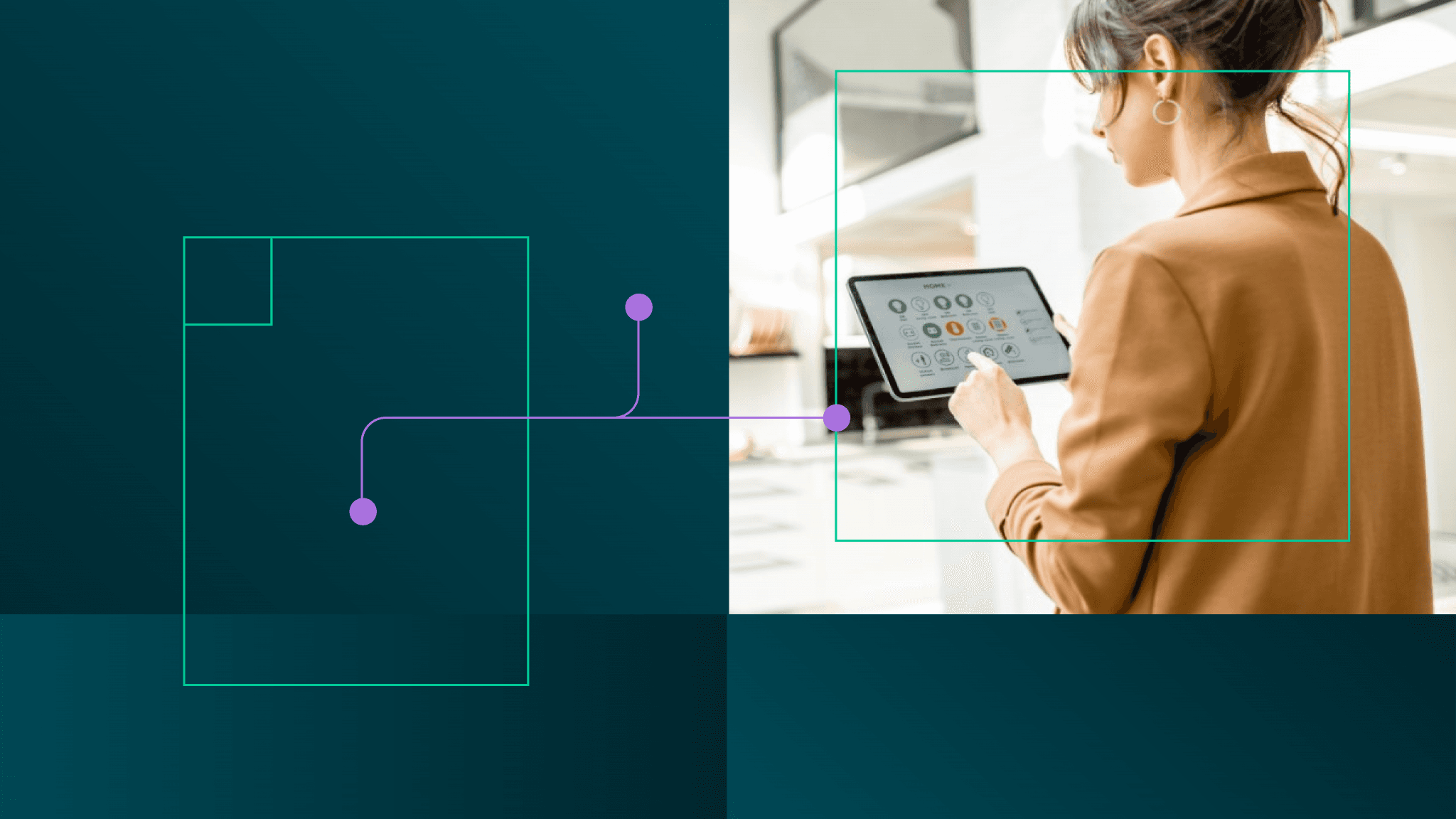
Machine-to-machine (M2M) technology powers everything from Internet of Things (IoT) sensors to autonomous supply chains. It refers to the direct communication channels machines use to exchange information and perform tasks without human intervention and with minimal supervision.
Artificial intelligence (AI) and machine learning (ML) aren’t required for M2M to work, but both can elevate the complexity of the tasks it performs and make it more autonomous.
The rise of M2M technology is a result of advanced modes of computing and connectivity, such as edge computing and 5G networks, both of which speed up the exchange of data over the web. Today, M2M shows up in a wide range of applications and use cases across industries.
But every M2M connection is also an identity that needs to be authenticated, monitored, and secured, which is where enterprise credential management comes in.
What is machine-to-machine technology?
Despite the name, machine-to-machine technology isn’t limited to hardware. It’s a combination of software, hardware, and network infrastructure that facilitates the transfer of data between machines.
An M2M system allows for separate machines to exchange information and collaborate on tasks without the manual assistance of a human. It can be used for a wide range of applications, from controlling climate in a conference room to autonomously implementing changes in a logistical operation, such as a supply chain, when unexpected events occur.
How does M2M technology work?
There are two main types of M2M devices for collecting and processing data. Sensors and monitors generate data and automatically transmit it to machines dedicated to processing the output. Machine-to-machine communication can be wired, but most connections rely on short-distance network technology, whether that’s Bluetooth, Wi-Fi, or radio-frequency identification (RFID).
Beyond collecting and processing data for insights, these machines also execute automated actions based on programmed logic or AI-driven decisions, without waiting for a person to step in.
M2M authentication: The credential layer most teams overlook
Every M2M connection requires authentication. Before one machine can exchange data with another, it has to prove its identity, and that proof comes in the form of credentials: Application programming interface (API) keys, OAuth tokens, service account passwords, certificates, or secrets.
In small deployments, these credentials are manageable. In enterprise environments, they aren’t. A large organization may have thousands of M2M connections, and each one carries its own credential that needs to be generated, stored, rotated, and eventually revoked. This is the machine identity problem, and it’s one of the fastest-growing sources of credential risk in enterprise security.
Why machine credentials are especially risky
- They don’t expire automatically. Unlike human passwords, API keys and service account credentials often have no built-in expiration. They persist indefinitely unless someone explicitly rotates or revokes them.
- They’re frequently hardcoded. Developers under deadline pressure embed credentials directly in application code, configuration files, or scripts, where they’re visible to anyone with repository access and nearly impossible to rotate without breaking something.
- They proliferate without governance. Every new M2M integration generates new credentials. Without a centralized inventory, security teams often have no idea how many machine credentials exist, who created them, or what systems they access.
- Offboarding doesn’t cover them. When an employee who set up an M2M integration leaves the organization, their associated machine credentials typically remain active, creating a persistent access path that standard offboarding processes miss.
For enterprise IT and security teams, the M2M credential layer is where significant, often undetected exposure builds up.
5 machine-to-machine applications and use cases
1. Healthcare and remote patient monitoring
M2M technology is widely used in healthcare to connect medical devices, wearables, and monitoring equipment. Devices such as glucose monitors, cardiac sensors, and infusion pumps transmit patient data directly to electronic health record (EHR) systems and clinical dashboards, enabling real-time monitoring without manual data entry by clinical staff.
In remote patient monitoring programs, M2M connections let clinicians track patient vitals from outside the hospital, reducing readmission rates and enabling earlier intervention.
2. Manufacturing and industrial IoT
In manufacturing, M2M technology underlies smart factory operations. Sensors embedded in production equipment transmit performance data, including temperature, pressure, vibration, and output rate, to centralized monitoring systems that detect anomalies and trigger automated responses.
Predictive maintenance is one of the most significant applications. M2M sensors flag equipment degradation before failure occurs, reducing unplanned downtime and extending asset life.
In highly automated facilities, M2M also coordinates robotics systems, conveyor logistics, and quality control processes.
3. Smart cities and infrastructure management
Municipal governments and utilities use M2M to manage infrastructure at scale. Smart traffic systems adjust signal timing based on real-time flow data. Smart grid systems monitor electricity demand and reroute power automatically during outages. Water utilities track pressure and flow rates across distribution networks to detect leaks and optimize delivery.
These applications reduce operational costs, improve service reliability, and generate the data cities need for long-term infrastructure planning.
4. Supply chain and logistics
M2M technology gives logistics operators real-time visibility into shipment location, condition, and estimated delivery time. GPS trackers on vehicles and shipping containers transmit location data continuously. Temperature and humidity sensors on refrigerated shipments alert operators to conditions that could compromise cargo integrity.
In warehouses, M2M systems coordinate automated guided vehicles, inventory scanners, and sorting equipment, enabling fulfillment operations to run with minimal human intervention.
5. Financial services and fraud detection
Banks and payment processors use M2M to monitor transactions in real time, comparing each one against behavioral models to detect anomalies that signal fraud. When a transaction deviates from established patterns, such as an unusual amount, an unfamiliar location, or an atypical time, the M2M system can flag it, delay it, or trigger a secondary verification step, all without human review.
M2M also underpins ATM network monitoring, point-of-sale system status reporting, and the real-time settlement processes that move funds between financial institutions.
The security risks of M2M technology in enterprise environments
M2M systems expand an organization’s attack surface in ways that are often invisible to the security team until a breach occurs.
- Credential exposure from hardcoded secrets. When developers hardcode API keys or service account passwords into application code, those credentials are exposed to anyone with access to the repository, including former employees, contractors, and, in the case of public repositories, the entire internet. Credential scanning tools regularly surface thousands of exposed secrets in public code repositories, many of them active and in use by production M2M systems.
- Lateral movement via machine accounts. Machine identities, including service accounts, API keys, and OAuth clients, are attractive targets for attackers because they often carry broad permissions and are rarely monitored with the same scrutiny as human user accounts. A compromised M2M credential can give an attacker persistent access to internal systems, with no password reset required and no login anomaly to trigger an alert.
- Inadequate rotation practices. The NIST Cybersecurity Framework recommends regular credential rotation as a core identity security control. In practice, most organizations rotate machine credentials infrequently, if at all. Long-lived credentials accumulate risk, since the longer a credential exists, the longer the window of exposure if it’s ever compromised.
- Shadow M2M integrations. In large organizations, individual teams frequently set up M2M integrations, connecting software as a service (SaaS) tools, internal APIs, or third-party services, without involving IT or security. These shadow integrations create credentials that don’t appear in any centralized inventory, can’t be monitored for unusual activity, and won’t be caught by standard deprovisioning processes.
- Third-party and vendor access. Many M2M integrations cross organizational boundaries, connecting internal systems to vendor platforms, data providers, or service partners. Each cross-boundary connection extends credential risk beyond the organization’s direct control. If the vendor is breached, the shared credentials are exposed too.
Managing M2M credential risk: What enterprise security teams need
Managing machine identity and M2M credential risk takes the same discipline applied to human credential management, adapted for the scale and lifecycle of machine accounts.
- Centralized credential inventory. Security teams need a single, authoritative inventory of every machine credential in the environment: What it authenticates, who created it, when it was last rotated, and what permissions it carries. Without this inventory, risk assessment is guesswork and incident response is too.
- Automated rotation. Manual rotation of API keys and service account credentials is slow, error-prone, and rarely done consistently. Automated rotation, triggered by schedule or by policy, reduces the risk window associated with long-lived credentials and removes the human bottleneck from a process that should run continuously.
- Least-privilege access. Every M2M credential should carry only the permissions required for its specific function. A sensor that reads temperature data shouldn’t have write access to the database. A service account that generates reports shouldn’t have administrative access to the systems it reports on. Scoping permissions to the minimum necessary access limits the blast radius of a credential compromise.
- Audit logging and SIEM integration. Every action taken with a machine credential, including authentication, data access, and configuration changes, should be logged and fed into the organization’s security information and event management (SIEM) platform. This provides the visibility needed to detect unusual behavior, support forensic investigation, and satisfy compliance requirements.
- Secure credential storage. Machine credentials that must be stored, such as API keys, secrets, and service account passwords, should be held in a secure vault with access controls, audit trails, and encryption at rest. Storing credentials in spreadsheets, plaintext configuration files, or shared drives isn’t acceptable practice in an enterprise security program.
For enterprise organizations looking to bring M2M credential management under the same governance framework as human credential management, Dashlane provides a centralized vault with Admin Console visibility, audit logging, SIEM integration, and zero-knowledge encryption, so security teams can manage machine and human credentials in one place, with consistent controls applied to both.
M2M security and zero-trust architecture
M2M environments present a particular challenge for organizations implementing zero-trust security architecture. Zero trust operates on the principle of never trust, always verify. Every request, from every identity, human or machine, must be authenticated and authorized before access is granted.
Applying zero trust to M2M environments means the following.
- Identity verification for every machine connection. Each M2M device or service must present a verifiable identity before it can access any resource. Certificate-based authentication and short-lived tokens are preferred over static API keys.
- Continuous authorization. Access decisions aren’t made once at login and then inherited for the session. Each request is independently evaluated against current policy.
- Microsegmentation. M2M networks are divided into small segments with strict controls over which machines can communicate with which. A compromised device in one segment can’t freely move across the network.
- Visibility into machine behavior. Monitoring tools track what each machine is doing, flagging deviations from established behavior patterns that may signal compromise.
Zero trust isn’t a product. It’s a security framework. But it requires the right tooling, including identity providers, certificate management, privileged access management, and credential governance platforms, to make zero trust practical in an M2M environment.
M2M security standards and compliance considerations
Enterprise organizations deploying M2M technology need to account for the security standards and regulatory requirements that govern machine identity and automated data exchange.
- NIST SP 800-63B. The NIST Digital Identity Guidelines cover authenticator management for both human and machine identities, including requirements for credential strength, storage, and lifecycle management.
- NIST Cybersecurity Framework (CSF) 2.0. The Identify and Protect functions of the CSF directly address machine identity governance, including asset inventory, access management, and credential security controls.
- SOC 2 Type II. Systems that handle sensitive data through M2M connections must demonstrate controls over access management, including how service account credentials are governed.
- ISO 27001. Requires a formal information security management system that addresses all identities, human and machine, with documented controls for credential management and access review.
- HIPAA. M2M connections that transmit protected health information (PHI) must implement access controls and audit trails that meet HIPAA Security Rule requirements.
- PCI DSS. Payment card M2M systems must comply with PCI DSS requirements for access control, credential management, and network segmentation.
Meeting these requirements in an M2M environment requires deliberate tooling choices. Standard, human-focused identity and access management platforms often don’t address machine credential lifecycle management.
Organizations should evaluate whether their credential governance platform can cover machine identities alongside human accounts, or whether they need a separate secrets management solution.
Frequently asked questions
What is machine-to-machine (M2M) authentication?
M2M authentication is the process by which one machine proves its identity to another before exchanging data or executing a task. Unlike human authentication, which uses a username, password, and MFA, M2M authentication typically uses API keys, OAuth client credentials, certificates, or service account tokens.
Because there’s no person in the loop to enter a password, machine credentials must be securely generated, stored, and rotated through automated or policy-governed processes.
What is a machine identity in enterprise security?
A machine identity is the digital credential assigned to a non-human entity, such as a server, application, IoT device, service account, or automated process, that lets it authenticate to other systems. Machine identities include TLS and SSL certificates, SSH keys, API keys, OAuth tokens, and service account credentials.
Enterprise organizations may have far more machine identities than human user accounts, and they’re often managed with far less rigor.
What are the biggest security risks of M2M technology?
The primary M2M security risks are hardcoded credentials embedded in application code, long-lived API keys that are never rotated, shadow integrations created without IT oversight, machine accounts with excessive permissions, and inadequate monitoring of machine-to-machine traffic for unusual behavior.
Each of these creates exposure that standard, human-focused security controls don’t address.
How do enterprises manage API keys and machine credentials securely?
Best practices include storing credentials in a centralized secrets vault rather than in code or configuration files, enforcing automatic rotation on a defined schedule, applying least-privilege permissions to every machine account, logging all credential usage to a SIEM platform, and maintaining a complete inventory of every machine credential and the systems it accesses.
Enterprise credential management platforms can extend these controls to both human and machine credentials in a unified governance framework.
How does zero-trust architecture apply to M2M environments?
In a zero-trust M2M environment, every machine-to-machine connection is treated as untrusted by default. Each connection must present a verifiable identity, and access is granted only for the specific resource and action requested, not inherited from a prior session.
Zero trust for M2M typically involves certificate-based authentication, short-lived tokens, microsegmentation of device networks, and continuous behavioral monitoring to detect unusual machine activity.
What is the difference between M2M and IoT?
M2M is a communication paradigm: direct data exchange between machines without human intervention. IoT is an ecosystem of connected physical devices. IoT devices communicate using M2M protocols, so IoT is a subset of the broader M2M landscape.
In enterprise security contexts, both terms refer to environments where large numbers of non-human identities need to be authenticated, monitored, and governed.
How does a business password manager help with M2M security?
A business password manager addresses M2M security in two ways. First, it provides a secure vault for storing the credentials associated with M2M systems, such as API keys, service account passwords, and shared secrets, with access controls, audit logging, and encryption. Second, it gives IT and security teams a centralized inventory of which credentials exist, who has access to them, and when they were last rotated.
Dashlane extends these controls with Admin Console visibility, SIEM integration, and zero-knowledge architecture that keeps vault data from ever being accessible to the vendor.
The bottom line on M2M and credential risk
Machine-to-machine technology is embedded in nearly every sector of the modern economy, from the hospital room to the factory floor to the city street. Its core value is the same everywhere: Removing people from repetitive data exchange and decision tasks, so systems can respond faster and at greater scale than human operators can manage.
But M2M also introduces a credential management challenge that most enterprise security programs aren’t yet built to address. Every M2M connection is an identity. Every identity needs governance. And at enterprise scale, governance requires tooling, including a centralized inventory, automated rotation, audit logging, and access controls that apply equally to machine and human credentials.
For enterprise security teams building toward that standard, Dashlane provides the credential governance infrastructure needed to bring machine credential management in line with human identity security controls.
References
- Dashlane, “Hardware Security Key Purpose, Benefits & Use Cases,” September 2024.
- Analytics Steps, “Machine to Machine: Meaning, Key Features, and Communication,” August 2023.
- Particle, “M2M vs. IoT - Why You Need to Listen to What Your Machines Are Telling Each Other.”
- HowStuffWorks, “How the Internet of Things Works.”
- Plant Automation Technology, “M2M IoT Applications in Supply Chain and Logistics.”
- M2M Connectivity, “Smart City IoT Solutions.”
- NextPhase Medical Devices, “M2M Communication in Medical Device Development.”
- RF Wireless World, “Advantages of M2M Communication.”
- emnify, “What Is M2M Technology? The Power of Connectivity,” May 2023.
- Digital Guardian, “Data Protection: Data In transit vs. Data At Rest,” May 2023.
- Science Direct, “The challenges of M2M massive access in wireless cellular networks.”
- Stytch, “The complete guide to machine-to-machine (M2M) authentication and authorization,” December 2023.
- Dashlane, “A Complete Guide to Multifactor Authentication,” January 2024.
- Dashlane, “Putting Security First: How Dashlane Protects Your Data,” February 2024.
- Dashlane, “Why You Should Keep Your Apps Updated,” February 2024.
Sign up to receive news and updates about Dashlane