[Sept 2026] What’s New at Dashlane: Credential Risk Assessment, SIEM Integrations, and More


In this monthly roundup of our latest updates and news, check out how we delivered more value to organizations in September 2026.
Custom credential risk exposure data in minutes
Most security leaders don't have a clear answer to a basic question: How exposed are our employees' credentials, really? SSO doesn't cover every app, phishing still gets through, and employees sometimes skip the password manager.
The new Credential Risk Assessment closes that gap. It's a free, seven-question quiz that gives your organization a personalized risk profile across four areas: Access, adoption, visibility, and response.
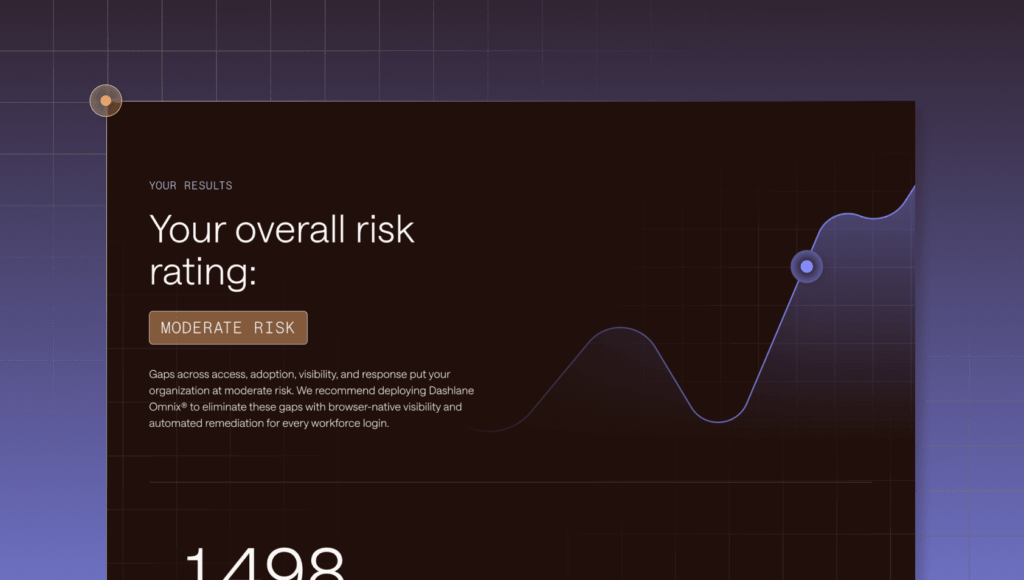
Answer a few questions about how your organization handles credentials today, and get a risk profile in return.
The result is a fast, tailored snapshot IT and security leaders can use to see where the gaps are and make the case for closing them before an incident forces the issue.
Credential risk telemetry native in five SIEM platforms
Identity providers and EDR tools can tell you if a login succeeded or a device is compromised, but they weren't built to see what happens inside the browser, where employees spend most of their day. Therefore, credential risk from weak, reused, or phished passwords never shows up, and logins to unmanaged SaaS apps go untracked entirely.
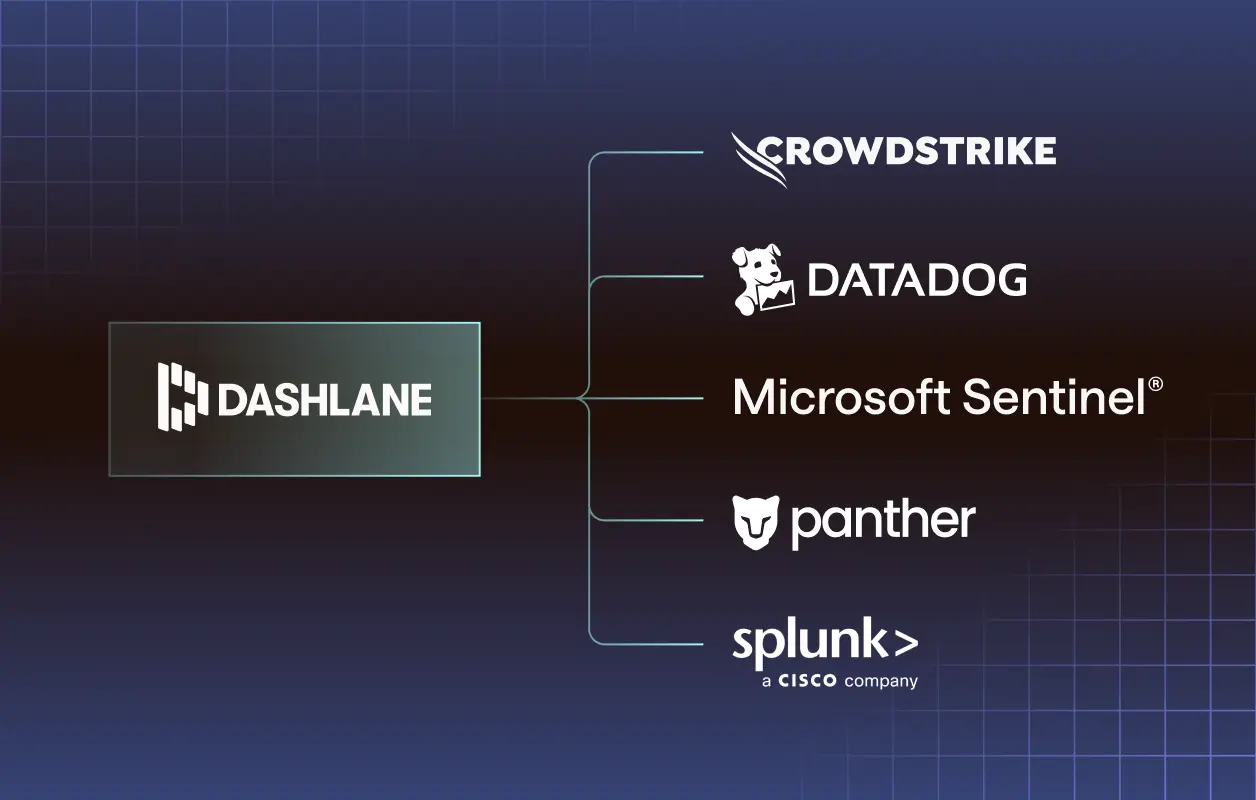
Dashlane Omnix® closes this gap. Panther SIEM, Datadog Cloud SIEM, and CrowdStrike Falcon® Next-Gen SIEM now join Microsoft Sentinel and Splunk on Omnix's growing list of SIEM integrations, bringing credential risk telemetry directly into the tools security teams already use.
Once the integration is set up, browser-native credential events—like at-risk credential usage and suspected phishing domains—flow into the SIEM automatically and correlate with the identity, endpoint, and network data already there. Detection that used to take days now takes seconds, with no new console to learn or manage.
Passkeys for SSO users, now everywhere they log in
Employees who sign in through SSO can now create and use passkeys on every website, even those that mandate user verification. Save every passkey into your vault, regardless of how you log in.
This matters because passkeys, unlike passwords, can't be entered on a lookalike site, guessed, or stolen in a breach, making them a more secure, phishing-resistant credential option.
Sign up to receive news and updates about Dashlane